
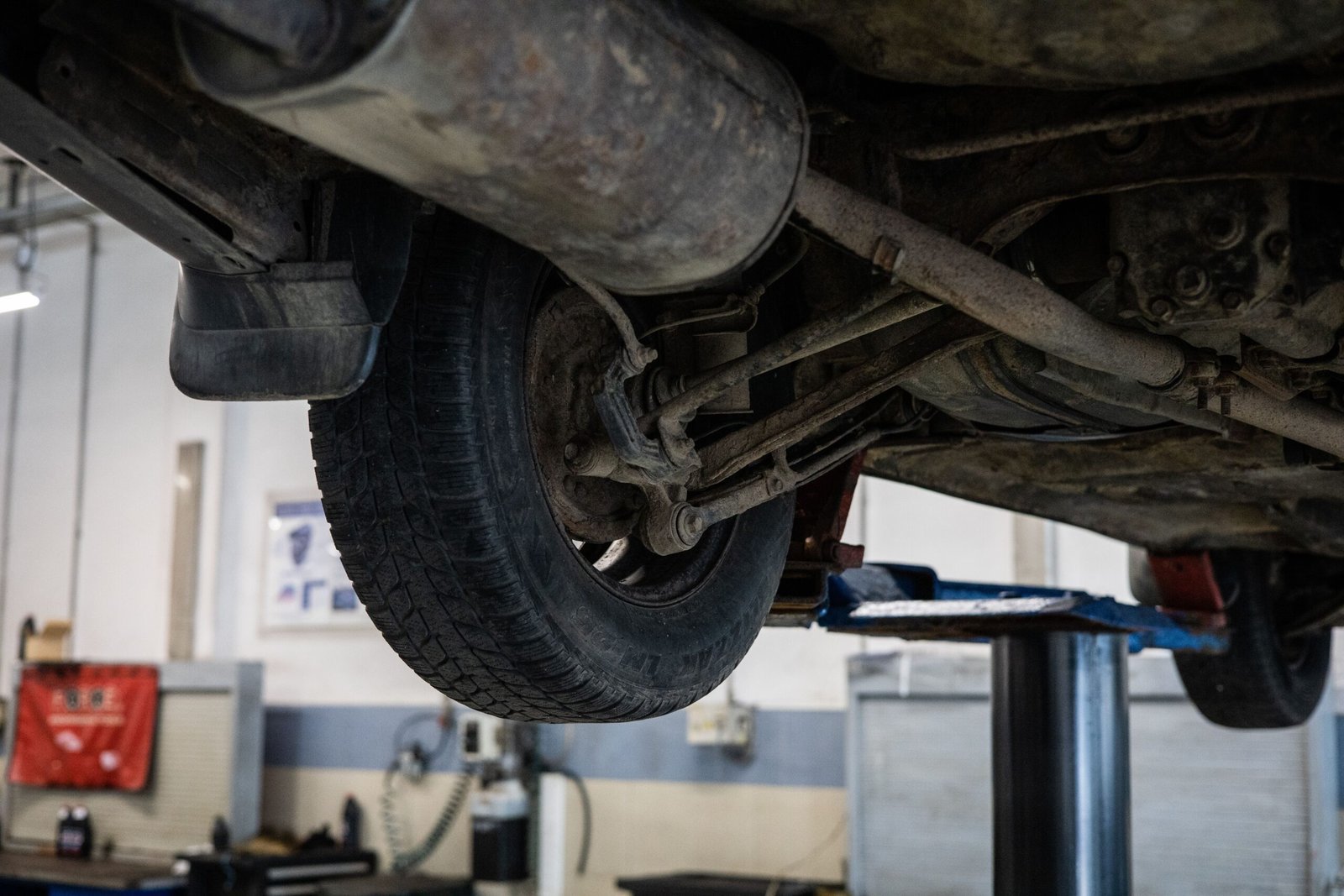
Tire alignment is an important part of vehicle maintenance that can affect how your car handles, how evenly your tires wear, and how confidently you drive. If your vehicle pulls to one side, your steering wheel sits crooked on a straight road, or your tires show unusual wear, an alignment check may be worthwhile.
Although drivers often use the term tire alignment, the service is more accurately called wheel alignment. A technician measures and adjusts the angles of the wheels and related suspension settings to match the vehicle manufacturer’s specifications. The goal is to help the tires maintain the correct relationship with the road and with one another. <Cite refs={[“turn619467search0″,”turn619467search3”]}/>
Understanding tire alignment can help you recognise warning signs, avoid unnecessary tire wear, and know what to expect when visiting an auto repair shop. This guide explains how alignment works, the symptoms of a problem, the difference between alignment and balancing, typical service considerations, and when to book an inspection.
What Is Tire Alignment and Why Does It Matter?
Tire alignment is the process of checking and adjusting the angles of a vehicle’s wheels according to the manufacturer’s specifications. The work involves the suspension and steering geometry rather than simply repositioning the tires on the rims.
Correct alignment helps the tires roll in the intended direction and maintain suitable contact with the road. When the angles are outside the recommended range, the tires may scrub against the pavement instead of rolling as intended. This can contribute to uneven tread wear, poor steering response, and reduced driving stability. <Cite refs={[“turn619467search0″,”turn619467search1”]}/>
Alignment matters because tires are expensive safety components. Uneven wear can shorten their useful life, meaning you may need to replace them sooner than expected. Incorrect alignment can also affect the way the vehicle tracks on a straight road and responds when you steer.
A properly aligned vehicle is not guaranteed to eliminate every handling problem. Tire pressure, tire condition, road surface, suspension wear, and braking issues can also affect how a car feels. That is why a qualified technician should inspect the vehicle rather than assuming that alignment is the cause of every steering concern.
There are three main alignment angles that technicians commonly assess:
- Camber: The inward or outward tilt of a wheel when viewed from the front of the vehicle.
- Toe: The direction the wheels point relative to one another when viewed from above. They may point slightly inward or outward, depending on the vehicle’s specifications.
- Caster: The angle of the steering axis when viewed from the side. It helps influence steering stability, steering effort, and the way the steering wheel returns after a turn.
Each vehicle has its own alignment specifications. The correct settings depend on the design of the suspension and steering system, so a technician should use the appropriate manufacturer data instead of applying one universal setting to every car. <Cite refs={[“turn619467search0″,”turn619467search3”]}/>
Signs Your Vehicle Needs a Tire Alignment
Alignment problems can develop gradually, and the symptoms may be easy to overlook at first. Paying attention to changes in steering and tire wear can help you identify a possible issue before it causes more damage.
Your vehicle pulls to one side. If the car consistently drifts or pulls left or right on a reasonably level road, the alignment may need checking. However, tire pressure differences, road camber, tire defects, and brake problems can produce similar symptoms. A technician can help identify the actual cause. <Cite refs={[“turn619467search2″,”turn619467search3”]}/>
The steering wheel is off-centre. When you are driving straight, the steering wheel should generally sit close to its normal centred position. If the vehicle travels straight while the steering wheel remains noticeably tilted, the alignment or steering geometry may need inspection.
The tire tread wears unevenly. Look for one edge of a tire wearing faster than the other, unusual feathering across the tread, or wear that appears much more pronounced on one side. These patterns can indicate incorrect alignment, although improper inflation, worn suspension parts, and neglected tire rotation can also contribute. <Cite refs={[“turn619467search0″,”turn619467search1”]}/>
The vehicle feels less stable. A car that wanders, feels less predictable, or requires frequent steering corrections deserves attention. Do not assume that alignment is the only possible explanation, particularly if the behaviour began suddenly.
You have recently hit a pothole or kerb. A strong impact can change suspension geometry or damage steering and suspension components. Even if the vehicle appears to drive normally afterward, an inspection may be sensible if the impact was significant. <Cite refs={[“turn619467search1″,”turn619467search7”]}/>
You have replaced suspension or steering parts. Work involving components such as tie rods, control arms, or other parts that affect wheel geometry may require an alignment check. Your repair technician can advise whether alignment is needed after the specific repair.
One symptom alone does not confirm a misalignment. If the steering suddenly becomes difficult, the vehicle pulls strongly, a tire appears damaged, or you hear unusual mechanical noises, stop somewhere safe and arrange a professional inspection rather than continuing to drive normally.
Tire Alignment vs. Wheel Balancing: What’s the Difference?
Tire alignment and wheel balancing are frequently confused because both are associated with tire maintenance. However, they solve different problems.
Alignment adjusts wheel angles. It focuses on how the wheels are positioned relative to the vehicle and road. Its main benefits include more predictable steering and reduced risk of alignment-related uneven tire wear.
Balancing corrects uneven weight distribution. A tire and wheel assembly may have small differences in weight around its circumference. A technician uses a balancing machine to identify the imbalance and adds appropriate weights to help the assembly rotate smoothly. <Cite refs={[“turn619467search3″,”turn619467search6”]}/>
The symptoms can help you understand which service might be needed, although a proper diagnosis is still important.
| Feature | Tire or wheel alignment | Wheel balancing |
|---|---|---|
| Main purpose | Correct wheel and suspension angles | Correct weight distribution around the wheel and tire |
| Common warning sign | Vehicle pulls to one side or steering wheel sits off-centre | Vibration at certain speeds |
| Tire wear concern | Uneven wear caused by incorrect geometry | Imbalance may contribute to vibration and irregular wear |
| Typical equipment | Alignment system with vehicle-specific measurements | Wheel balancing machine |
| When it may be needed | After certain impacts, repairs, or signs of misalignment | When installing tires or when vibration suggests imbalance |
For example, if your steering wheel vibrates at higher speeds, wheel balancing may be one possible solution. If your car consistently pulls to one side and one tire’s inner edge is wearing rapidly, an alignment inspection may be more relevant. Neither symptom is conclusive on its own, so a technician should assess the tires, wheels, and suspension.
Some visits may involve both services, especially when new tires are installed or when an inspection reveals multiple issues. Ask the shop to explain the diagnosis so you understand which work is necessary.
How Much Does Tire Alignment Cost?
The cost of tire alignment varies by vehicle, location, service type, and repair requirements. There is no single price that applies to every car or repair shop.
A basic front-wheel alignment may cost less than a four-wheel alignment, but the appropriate service depends on the vehicle’s suspension design and the manufacturer’s recommendations. Some vehicles allow adjustments to several alignment angles, while others may have limited adjustment points unless worn or damaged parts are repaired.
Several factors influence the final price:
- Vehicle type: Passenger cars, SUVs, trucks, and performance vehicles may have different alignment requirements.
- Type of alignment: Front-end and four-wheel alignment services can involve different procedures and prices.
- Local labour rates: Prices vary by region, workshop, and the equipment available.
- Condition of the suspension: Worn tie rods, ball joints, bushings, or other parts may prevent a technician from achieving the correct settings.
- Adjustments required: A straightforward adjustment may be less expensive than work involving seized or difficult-to-access components.
- Additional inspection or repairs: Damaged wheels, suspension issues, or tire defects may require separate work.
To get an accurate estimate, ask the repair shop whether its quote includes an initial measurement, the required adjustments, a final measurement, and a printed or digital alignment report. Confirm whether taxes and any additional charges are included.
It is also worth asking whether the shop will inspect the suspension before adjusting the alignment. If components are worn or damaged, adjusting the angles alone may not solve the problem or keep the settings within specification.
Avoid choosing a service based only on the lowest advertised price. A useful comparison considers the equipment, technician experience, scope of service, and whether the shop provides before-and-after readings.
A proper alignment can help reduce premature tire wear when misalignment is the cause. However, it cannot restore tread that has already worn away or guarantee a specific amount of fuel savings. Any financial benefit depends on the vehicle’s condition, driving habits, tire maintenance, and the underlying problem.
When Should You Get a Tire Alignment?
There is no single schedule that is ideal for every vehicle. Follow your owner’s manual and manufacturer recommendations, and arrange an inspection when you notice symptoms of misalignment.
An alignment check is particularly sensible in the following situations:
After a significant pothole or kerb impact. A strong impact can affect the suspension or steering geometry. If you notice new pulling, a crooked steering wheel, or unusual tire wear afterward, book an inspection. <Cite refs={[“turn619467search1″,”turn619467search7”]}/>
When installing new tires. New tires are a significant investment, and an alignment check can help identify geometry problems that might cause them to wear unevenly. Ask your tire shop whether a check is recommended for your vehicle and circumstances.
After relevant suspension or steering repairs. Replacement of certain components can change the wheel angles. The technician performing the repair should explain whether an alignment is needed.
When tire wear becomes uneven. If one tire or one edge of a tire is wearing faster than the others, have the cause investigated. The solution might involve alignment, inflation, rotation, worn components, or a combination of factors.
When steering behaviour changes. A new tendency to drift, wander, or hold the steering wheel at an unusual angle should not be ignored.
Some manufacturers and tire service providers recommend periodic checks, sometimes annually. The right interval depends on the vehicle, driving conditions, and manufacturer guidance, so consult your owner’s manual rather than relying on a universal mileage rule. <Cite refs={[“turn619467search3″,”turn619467search11”]}/>
Remember that routine tire maintenance still matters between alignment checks. Maintain the recommended tire pressure, inspect tread condition, rotate tires according to the vehicle’s maintenance schedule, and address suspension noises or steering changes promptly.
What Happens During a Tire Alignment?
A professional tire alignment usually involves measuring wheel angles, comparing the readings with vehicle-specific specifications, and making adjustments where the design permits.
Although the exact procedure varies, the process generally includes several steps.
1. Initial vehicle inspection
The technician may check tire condition, tire pressure, wheel condition, steering components, and suspension parts. Damaged or worn components can affect the readings or prevent the alignment from staying within specification.
2. Positioning the vehicle
The vehicle is placed on an alignment rack or suitable level platform. Sensors or targets are attached to the wheels so the equipment can measure their positions and angles.
3. Measuring alignment angles
The system records relevant readings, which may include camber, caster, and toe. The technician compares them with the specifications for the vehicle’s make, model, and configuration.
4. Making necessary adjustments
If the readings fall outside the permitted range, the technician adjusts the relevant components where adjustment is possible. If a part is damaged, seized, or worn, a repair may be necessary before the correct settings can be achieved.
5. Checking the steering wheel position
The technician should ensure that the steering wheel is centred appropriately as part of the alignment procedure. Incorrect centring can leave the vehicle feeling wrong even if some individual measurements appear acceptable.
6. Final measurements and report
After adjustments, the equipment measures the angles again. Ask for the before-and-after readings so you can see what was outside specification and what changed.
A straightforward alignment may take less time than a job involving seized adjusters or suspension repairs. The total time also depends on the vehicle and the shop’s workload, so ask for an estimate when booking.
If the technician says the alignment cannot be corrected, ask which readings remain outside specification and why. Possible causes include damaged components, worn suspension parts, or limits in the vehicle’s adjustment design. A clear explanation helps you decide what work is genuinely required.
How to Maintain Proper Tire Alignment and Extend Tire Life
Correct alignment is only one part of looking after your tires. A few regular habits can help you identify problems early and reduce avoidable wear.
Check tire pressure regularly. Use the pressure recommended by the vehicle manufacturer, usually shown on the d










Leave a Reply